Understanding Google's Query Fan-Out: How AI Overviews Build Better Answers
For years, SEO was largely about matching content to individual keywords. If someone searched "best water filter for well water," Google tried to find pages optimized for that phrase. AI-powered search is different. With AI Overviews and AI Mode, Google frequently uses a technique called "query fan-out." This is a process whereby it breaks a user's original question into multiple related sub-questions, retrieves information for each one, and then synthesizes the results into a single response. Rather than finding one page that ranks for one keyword, Google's AI is attempting to understand the entire problem the searcher is trying to solve.
For content creators and SEO professionals, understanding fan-out queries may be one of the most important shifts in modern search.
What Is a Fan-Out Query?
A fan-out query occurs when Google's AI takes an initial search and expands it into several related searches that explore different aspects of the topic. Google has described this process as breaking a question into subtopics and issuing multiple searches simultaneously on the user's behalf.
Here's a simple example of how a fan-out might go:
Traditional Search
User query: "Best water softener for well water"
Google primarily looks for pages targeting that phrase.
AI Search
The same query might be expanded into:
- What causes hard water in wells?
- How do water softeners work?
- Is iron removal needed with hard well water?
- Salt-based vs salt-free systems
- Water softener sizing
- Water softener maintenance requirements
- Average costs of softener systems
- Best solutions for rural homes
The AI then combines what it learns from those searches into a more complete answer.
Why Does Google Use Query Fan-Out?
Users often ask broad questions, but need nuanced answers. A single webpage rarely addresses every angle of a complex topic. By expanding the query, Google's AI can gather information from multiple sources and perspectives before generating a thorough response.
According to explanations from Google and industry analyses, query fan-out helps AI:
- Understand true search intent
- Explore multiple interpretations of a question
- Gather information from diverse sources
- Anticipate follow-up questions
- Deliver more complete answers
- Perform comparisons and decision-making tasks more effectively
This is especially useful for queries involving research, comparisons, purchasing decisions, troubleshooting, or technical topics.
Examples of Fan-Out Queries
Example #1: "Is Reverse Osmosis Water Good for You?"
Potential fan-out searches:
- What is reverse osmosis water?
- Does reverse osmosis remove minerals?
- Are minerals in drinking water important?
- Benefits of reverse osmosis filtration
- Reverse osmosis vs filtered water
- Potential drawbacks of reverse osmosis systems
- Who should use reverse osmosis systems?
Notice how the AI explores benefits, drawbacks, health implications, and technical details before producing an answer.
Example #2: "Should Seniors Do Strength Training?"
Possible fan-out searches:
- Benefits of strength training for seniors
- How strength training affects bone density
- Strength training and fall prevention
- Recommended exercises for older adults
- Safe strength training practices
- How often seniors should exercise
- Risks of strength training for elderly adults
The AI is trying to answer not just the original question, but all of the concerns someone might have before deciding whether to start.
Example #3: "How Do Hard Money Loans Work?"
Possible fan-out searches:
- Definition of hard money loans
- Hard money vs conventional financing
- Hard money loan requirements
- Interest rates on hard money loans
- Fix-and-flip financing options
- Typical loan terms
- Advantages and disadvantages
- When investors use hard money lending
This is particularly relevant for real estate SEO because many investor-related searches naturally contain multiple layers of intent.
How Can You Identify Potential Fan-Out Queries?
Method 1: Self-Directed
One of the best ways to think about fan-out is to ask: "If a user asked me this question in person, what follow-up questions would they ask next?" Those follow-ups often become Google's fan-out queries.
Start With Core Intent
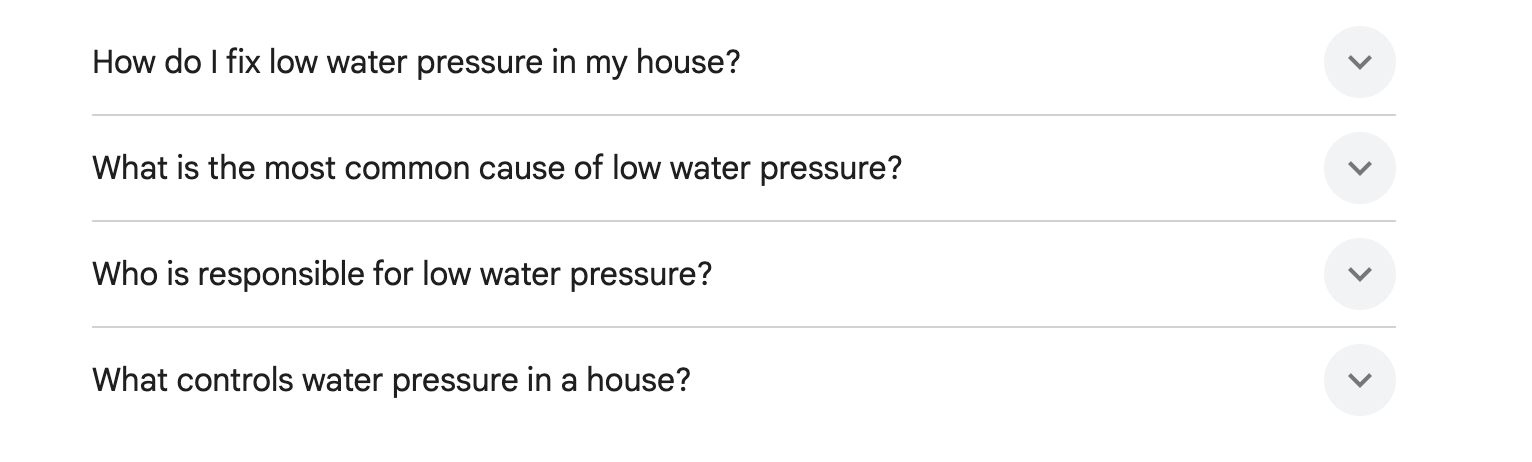
Take a primary topic: "What causes low water pressure?"
Now identify related questions. A good place to start for this is the "people also ask" section of Google:
As you expand the questions, more will load:
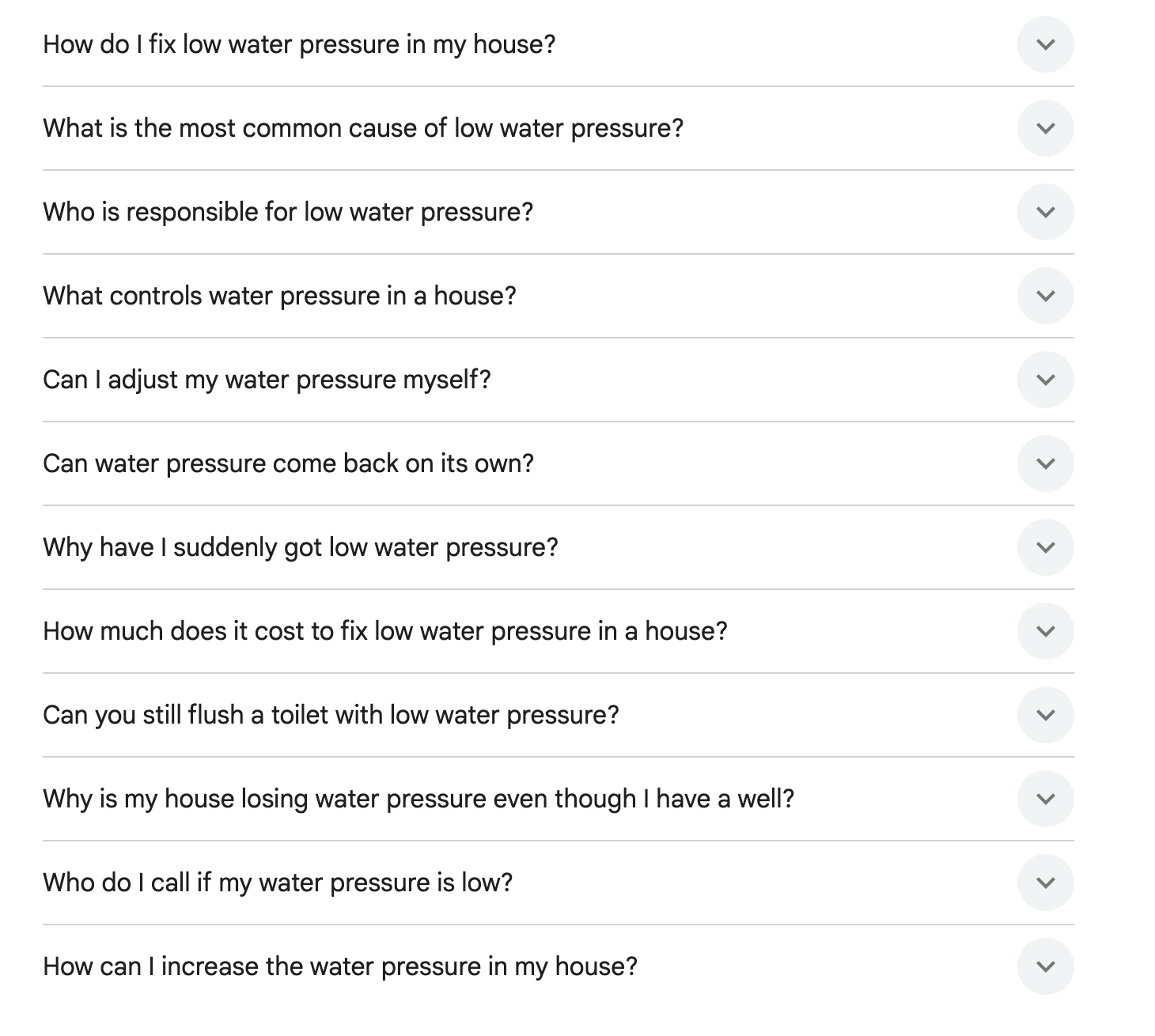
These are, essentially, follow-up questions users might have, which means AI will be looking for answers to these queries to answer the core topic.
Method #2: Use A Query Fan-Out Generator Tool
If you want to save time, you can use Serenity Digital's Query Fan-Out Generator Tool! Enter your "seed" keyword and, if you want even more personalized subqueries, enter the domain of the site you are writing for. The tool will automatically generate a list semantically related search queries across 8 different variations.
Use our Query Fan-Out Generator Tool to help you come up with some questions to answer so you are more likely to appear in AI overviews. It's totally free–we don't even mine your email.
How to Optimize Content for Fan-Out Queries
The biggest mistake marketers make is creating content that targets only a single keyword. AI search rewards topical thoroughness. Start by:
Building Topic Clusters
Instead of one page covering only: "Menopause Anxiety Symptoms"
Also create supporting content:
- Causes of menopause anxiety
- Treatment options
- Hormone therapy and anxiety
- Lifestyle changes
- Stress management techniques
This helps establish expertise across the entire topic ecosystem.
Answer Questions Explicitly
AI systems frequently extract specific passages that directly answer questions. Clear, concise answers make retrieval easier.
Use subheads (H2, H3) like:
- Does Hard Water Damage Appliances?
- How Often Should a Water Softener Regenerate?
- Is Reverse Osmosis Safe for Daily Drinking?
Each creates a standalone answer that can satisfy a fan-out search.
Include Comparisons
Many fan-out searches are comparative. Examples:
- Bridge loan vs hard money loan
- Water softener vs conditioner
- Counseling vs medication
- Assisted living vs memory care
Comparison tables and side-by-side explanations help satisfy multiple AI-generated subqueries.
Use Clear Content Structure
AI retrieval systems tend to perform better when content is organized logically. Many SEO professionals observing AI search behavior have found that well-structured sections, descriptive headings, FAQs, and concise answer blocks are easier for AI systems to extract and cite.
In fact, if you find that answering subqueries derails your original topic too much, you can add a FAQs section after the main content to help address any additional queries someone may have on the subject.
The Future of SEO Is Intent Coverage
Query fan-out highlights a major philosophical shift in search. Google is no longer trying to find the page that best matches a keyword. Instead, it is attempting to solve a user's problem by researching multiple related questions simultaneously.
For content creators, this means success increasingly depends on answering an entire topic, not just targeting a single phrase. The websites most likely to earn visibility in AI Overviews are the ones that provide comprehensive, trustworthy answers to both the primary question and the dozens of related questions that surround it.
If you need assistance writing content and/or generating topics that will rank for AI search, give us a call! We love working with business owners who have a great product or service and want more people to know about it! Call or go online today to get started!